
One Stop
for everything DSAR.
DSAR Center connects your data sources and runs collect, update, and delete requests through a single audited pipeline. The systems other privacy tools skip, the legacy databases and custom APIs, are exactly the ones we reach.
A request is only fulfilled when the last system is clean.
Static intake forms and SaaS-only tools cover the easy systems and leave your team to chase the rest by hand. The data subject does not care that one database had no connector. Regulators do not either. A partially fulfilled request is still a finding.
DSAR Center closes that gap. Every source becomes a connector, every request runs the same pipeline, and the result is an audit trail you can hand to legal.
Six stages, every one audited
The request type gates the stages. A collect request runs collect only; a delete request runs collect, delete, then validate. Webhooks fire at the start and end of every stage.
- 1
Confirm
The subject clicks an emailed link to prove the address is theirs.
- 2
Verify
Staff confirm the person exists, or let an automation mark it verified.
- 3
Collect
Each connector gathers the subject's data. Review it before moving on.
- 4
Delete
After the review gate, each connector removes the matching records.
- 5
Validate
DaedalusDSAR re-runs collect to confirm the data is gone, recording proof the delete succeeded.
- 6
Complete
The subject is notified, and the request's personal data is pruned from DaedalusDSAR 30 days later, so it is not retained.
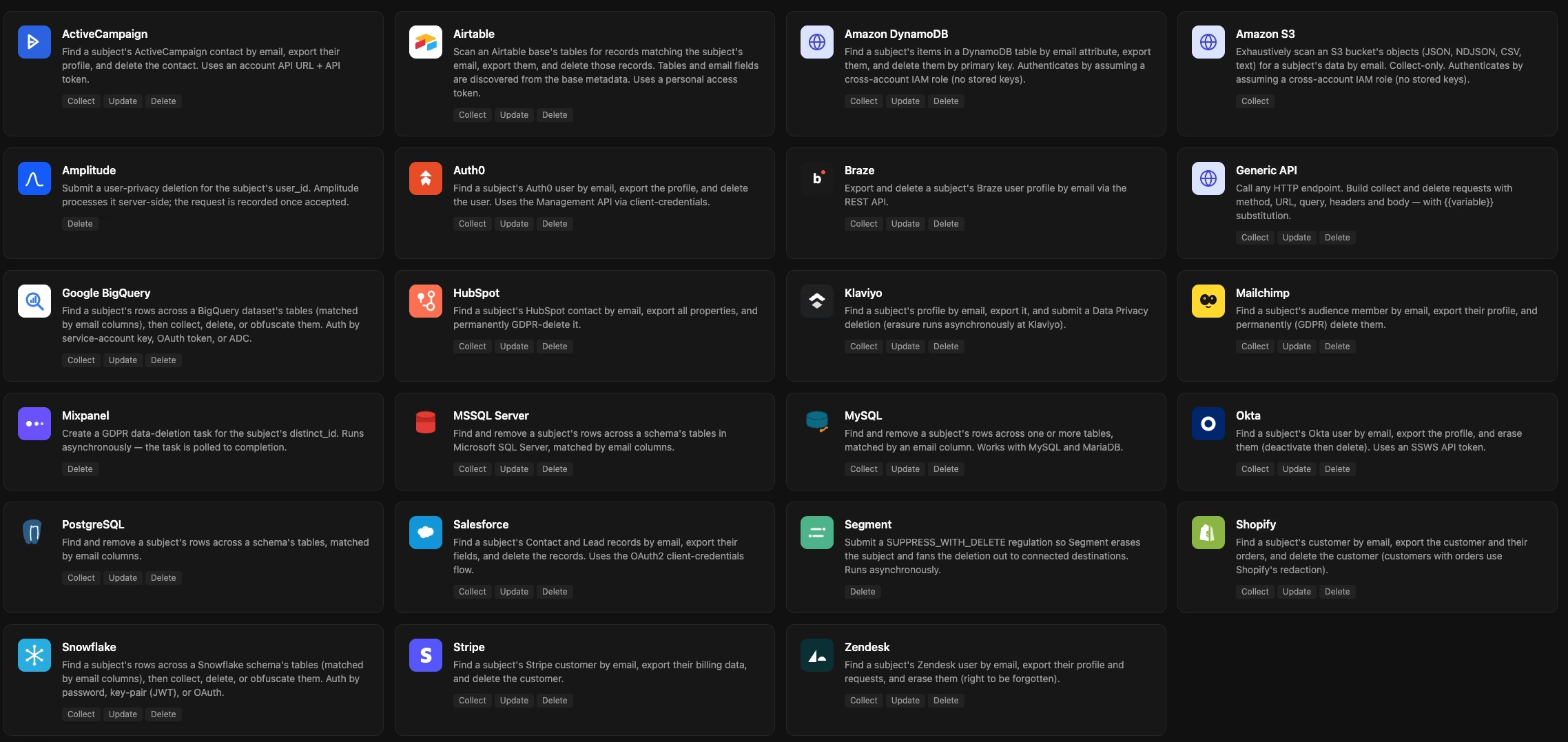
Connect the systems your data actually lives in
Add a data source from the catalog, name it, choose whether it collects, updates, or deletes, and configure each capability. Twenty-two connectors ship out of the box and the list keeps growing, and a generic API connector reaches anything else with an endpoint. Point it at an AWS account and it discovers your S3, DynamoDB, and databases for you.
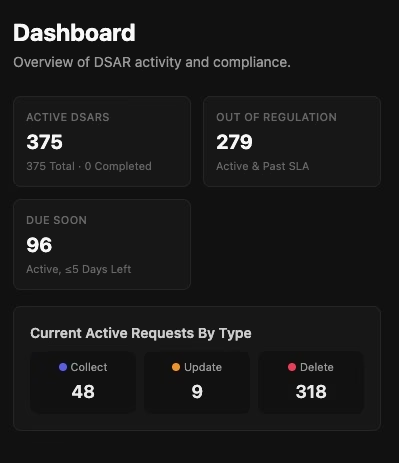
Active DSARs
#
Tracked by stage
Out of regulation
#
Past the statutory deadline
Due soon
#
5 days or fewer remaining
On-time rate
#
Completed within the legal window
Regulation
#
Derived from subject location
Know Your Exposure
The applicable regulation is derived automatically from the subject's country and state, so GDPR, CCPA, and CPRA timelines are applied without anyone choosing them. The dashboard surfaces what is due soon and what has slipped, and the audit timeline records who did what at every step. When legal asks how you handled a request, the answer is one screen away.
FAQs
What data sources can DaedalusDSAR connect to for DSAR fulfillment?
DaedalusDSAR connects to 22 data sources out of the box, with more added regularly. That includes databases (PostgreSQL, MySQL, MariaDB, MSSQL Server, Snowflake, Google BigQuery), SaaS platforms (Salesforce, HubSpot, Stripe, Shopify, Zendesk, Klaviyo, Mailchimp, ActiveCampaign, Braze, Segment, Amplitude, Mixpanel, Okta, Auth0, Airtable), and storage (Amazon S3, DynamoDB). A generic API connector reaches any other system with a REST endpoint, using values drawn from the subject such as email and name. Point it at an AWS account and it auto-discovers your S3 buckets, DynamoDB tables, and databases as connectors.
Does DaedalusDSAR delete data, or only find it?
It does both. Collect gathers the subject’s data from every connected source, and delete removes it — a permanent GDPR erasure in HubSpot, a customer delete in Stripe, and so on. A review gate sits between the two stages, so your team inspects exactly what was found before anything is removed. Access requests are covered too: the subject verifies their identity and downloads their own data report.
Is the public request form a security risk?
No — the public form is deliberately isolated from everything sensitive. The internet-facing container serves only the submission form and its two submit endpoints; the admin console and all management APIs return 404 on that runtime and are reachable only from inside your network. The connectors that touch your data run on a separate scanner service that holds no database connection and no encryption key, so the exposed surface has nothing to reach.
Is DaedalusDSAR self-hosted or SaaS?
Both — self-hosted first, with a managed option. You can run it as containers in your own environment with Docker Compose or our AWS CloudFormation template, where it makes no outbound calls and can run fully airgapped, so your most sensitive data never leaves your infrastructure. If you’d rather we operate it, a managed cloud option is available with a scanner that can still sit inside your VPC. Either way, access is gated by local or SSO authentication with passkeys and TOTP MFA.
Put DaedalusDSAR on your hardest systems.
Tell us the source your current tool cannot reach. We will help you prove it during a 30-day demo, running on your own data in your own environment.